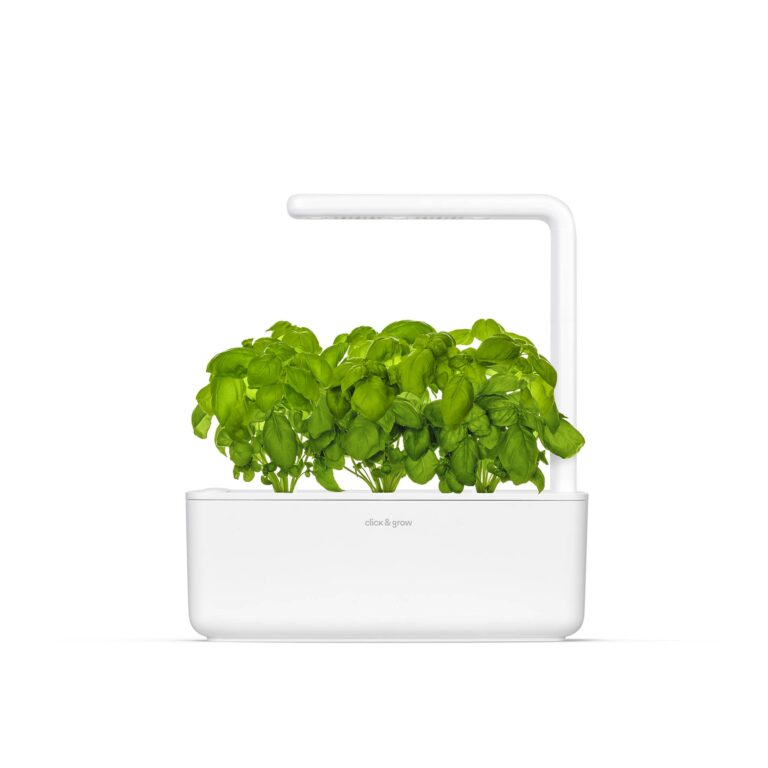
Click & Grow The Smart Garden 3
Grow three pod-based plants indoors with built-in lighting and passive watering, even without a useful sunny windowsill.
Source-based assessment
- Main advantage
- Grow three pod-based plants indoors with built-in lighting and passive watering, even without a useful sunny windowsill.
- Main drawback
- Three plants mean small harvests. Replacement pods, regular care and patience remain part of the deal.
Should you buy it?
Consider it for a small indoor herb hobby when natural light is poor and a simple routine matters more than maximum yield.
Skip it: you need enough basil for an industrial pesto operation, or mainly want to spend less on groceries.
Research-based buying assessment · Sources checked 12 October 2026. We have not tested this product ourselves. Manufacturer specifications are identified below; suitability and value judgments are our editorial reasoning.
The model, without the marketing fog
- The Smart Garden 3 has three plant positions, a grow light and passive watering.
- The listed starter kit contains three basil pods; check that your regional package includes them.
- Manufacturer dimensions are 300 × 120 mm in footprint, with lamp height extending from 210 to 470 mm.
- The listed tank holds 1.5 litres and the light is rated at 8W. Those specifications are not measured harvest yields.
Why buy a garden with a plug?
The point is making a small growing routine possible where a normal windowsill is not helpful. Built-in light and a reservoir remove two sources of guesswork. The best reason to buy is enjoying fresh leaves and watching plants develop, not expecting a countertop appliance to replace the vegetable aisle.
For a beginner, a contained three-plant system can feel manageable. For someone who already grows herbs successfully, it may solve little. A sunny sill, a suitable pot and basic plant care are still a perfectly respectable technology stack.
From the first pod to the first useful meal
Set the garden where its light will not annoy you, install the pods and fill the reservoir as instructed. Keep the plant-specific guidance handy. Watch the seedlings, remove germination covers at the appropriate stage and adjust the lamp as the plants develop.
Harvesting is not the same as simply pulling every leaf off. Follow the guidance for your chosen plant, keep an eye on growth and replenish water when needed. Refill intervals depend on conditions and plant size; we do not promise a set number of unattended days.
What three plants can realistically mean
Think garnish, a handful of herbs for a meal or a small gardening project. Repeated harvests depend on species, care and plant condition. We have not weighed yields, counted successful cycles or compared flavour with supermarket herbs. There is no tested cost per gram here.
If a recipe needs a large amount at once, supplementary herbs may still be necessary. Plan consumption around what grows rather than demanding that three small plants feed a crowd. Your countertop is a garden, not a basil distribution centre.
The convenience comes with a supply system
The standard route uses the brand’s plant pods, so availability and replacement cost matter. Check the plants you genuinely cook with and whether buying their pod packs leaves you paying for varieties you do not need. Variety is attractive only if you use it.
The companion app provides growing guidance; do not buy this model expecting a phone-controlled farm. Its attraction is simplicity. If you want extensive lighting control, flexible growing media or more plants, compare systems designed around those priorities before choosing this one.
Care, placement and running costs
Allow room for the lamp at its raised height, not only the compact base. Consider reflections and the light visible from nearby living or sleeping areas. Choose a location where checking water and tending plants is easy; hiding it somewhere inconvenient defeats its simple-care appeal.
Add electricity, replacement pods and occasional replacement parts to the purchase cost. Using the listed 8W rating as an example, monthly energy can be estimated as 0.008 × daily lit hours × days. At an illustrative 16 hours for 30 days that is 3.84kWh; multiply by your tariff. This is an arithmetic example, not our meter reading.
Savings, alternatives and our verdict
A proper comparison includes the pot or kit, consumables and the amount you actually harvest and eat. If leaves grow but never reach your plate, the food saving is zero. We would treat this as a small hobby with useful produce until real household use proves otherwise.
Buy supermarket herbs for immediate meals. Try conventional pots when light and attention are available. Choose a larger growing system only when you will use its output and can support its care. For this compact model, confirm local pod supply and returns before buying; avoid ordering on the strength of a promotional promise of effortless abundance.
Evidence, sources and what remains unknown
These official sources establish the listed features and operating requirements. They do not establish independently measured performance, long-term reliability or that this is the best product in its category. We have not completed a controlled comparison or a systematic failure-rate analysis. Our verdict is conditional on your routine and the checks above, rather than an invented score.
Prices, bundles, software terms and regional warranty conditions can change. Confirm them with the seller before ordering. Report a correction through our Contact page.